Paint Problem Solutions
Common car painting problems – and how to fix them
Even with careful work, things can go wrong. Here you will find solutions for the most common problems with car painting. With the right tips and products, you can still achieve a perfect result!
? The most common painting problems
? Paint absorbs / paint mist
Problem: The paint dries too quickly and forms a rough, matt surface – also known as orange peel.
Causes: Temperature too high, spray distance too large, too little paint applied
✓ Solution: Paint at 15-25°C, 20-25 cm distance, several thin coats (2-3 cross coats), flash off for 5-10 minutes between coats
? Paint runs / drips
Problem: The paint runs down and forms unsightly drips or drops.
Causes: Too much paint at once, too little distance, too slow movement
✓ Solution: Better to apply several thin coats, maintain distance, spray quickly. For runs: let dry, sand with P1500, polish
? Blistering in the paint
Problem: After drying, small bubbles form in the paint.
Causes: Moisture, silicone/grease residue, excessively thick layers, sunlight
✓ Solution: Degrease with silicone remover, work on dry substrate, paint in shade, thin coats
? Paint peeling off
Problem: The paint does not adhere properly and comes off after a short time.
Causes: No/incorrect primer, not sanded, dirt/grease
✓ Solution: Sand old paint (P400-P600), use silicone remover, suitable primer (for plastic: adhesion promoter)
? Color deviation
Problem: The new paint does not match the original paint exactly.
Causes: Original paint faded, incorrect paint code, missing clear coat for metallic
✓ Solution: Check paint code, send VIN if deviations, blend paint, always use clear coat for metallic!
? Clear coat matt
Problem: The clear coat does not shine properly and looks matt.
Causes: Clear coat too thin, base coat still damp, high humidity
✓ Solution: After drying, wet sand with P2000, polish with polishing paste. Apply clear coat again if necessary
? Recommended products for problem solutions
-
Sale!
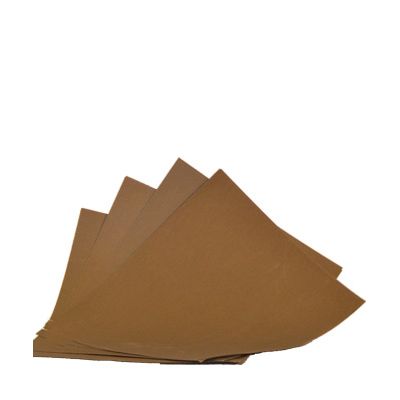
Waterproof sandpaper in a SET
Original price was: 32,00 €.29,90 €Current price is: 29,90 €. -
-
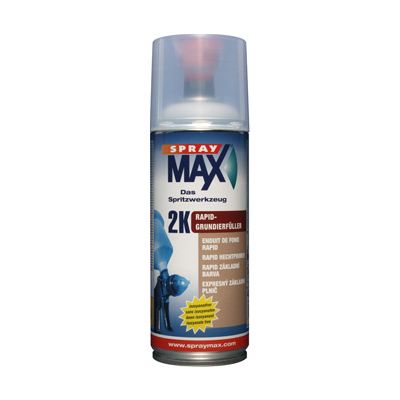
-
Sale!
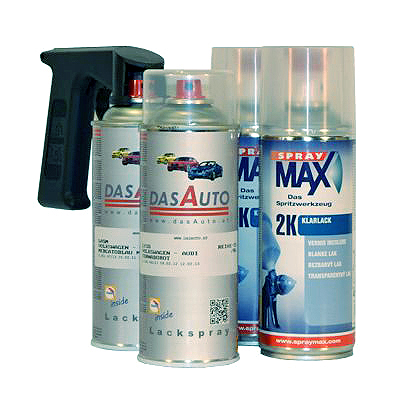
dasAuto 2K Paint Set Medium
Original price was: 129,10 €.118,80 €Current price is: 118,80 €. -
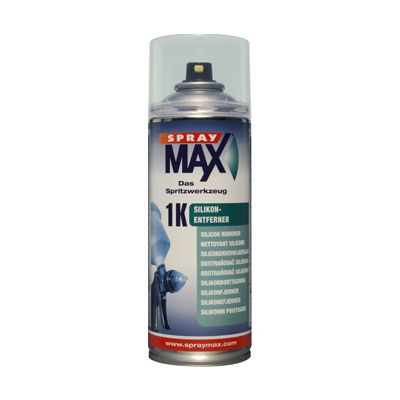
-
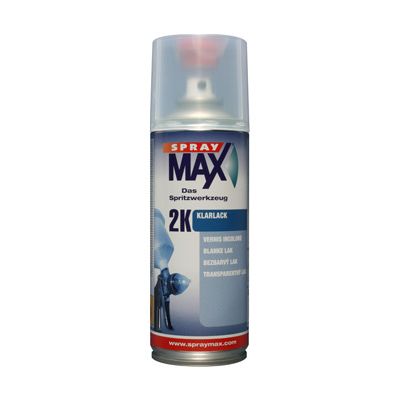
? Pro tips for avoiding problems
✅ Preparation is everything: Thoroughly clean and degrease the surface
✅ Richtig schleifen: P400-P600 for good paint adhesion
✅ Temperatur beachten: Ideal temperature is 15-25°C
✅ Dünne Schichten: Better 3x thin than 1x thick
✅ Ablüften lassen: 5-10 Minutes between coats
✅ Im Schatten arbeiten: No direct sunlight!
? Frequently asked questions about painting
Frequently asked questions and answers about painting, paint systems and processing
? Avoid painting problems
How can I avoid adhesion problems with my paintwork?
To avoid adhesion problems, the surface to be painted should always be dry, clean and free of grease. For problematic substrates such as plastics and polystyrene, the appropriate primer should always be used.
Wie kann ich Läuferbildung vermeiden?
Runs in the paintwork can be caused by several factors:
- Sprühabstand zum Objekt nie zu gering – immer 15-25 cm einhalten
- Do not apply the paint too thickly – spray several thin coats in a criss-cross pattern
- Ideale Verarbeitungstemperatur: 20-25°C
How do I remove white-hazed paint?
White hazing of the paint occurs when painting in too high humidity. The grey haze can be polished out after the paint layer has dried thoroughly. The optimum processing temperature is between 20 and 25°C with low humidity.
Meine Lackierung blättert ab und weist Risse auf
If no primer is used when painting plastics, the paint will flake off after first use – therefore use plastic primer.
Risse entstehen bei falschem Lackaufbau. Richtig: Primer – Base coat – Clear coat. For a complete paint build-up always eine Produktlinie desselben Herstellers use.
Why is my paint finish rough and not shiny?
Due to too large a spray distance, the paint no longer flows – it dries in the air (spray mist). Avoid this by maintaining a constant distance of 15-25 cm. Do not paint in direct sunlight and avoid dust – work in a sheltered location.
Auf meiner Lackierung bilden sich Runzeln / mein Lack quillt auf
Paint lifting occurs with synthetic resin paints (oxidative drying). After approx. 6 hours, no more overcoating should be done, as the lower paint layers swell due to re-addition of solvents.
Meine Lackierung sieht wie eine „Orange Peel” aus
Caused by too large a spray distance. The spray mist that has already dried in the air settles on the surface and no longer flows. Avoid at a constant painting distance of 15-25 cm and 20-25°C.
Wie entstehen Color Deviationen in meiner Lackierung?
Hierfür gibt es verschiedene Causes:
- Shake the can for at least 2 min. (from the audible impact of the mixing balls)
- If the coverage is poor, the primer shows through and distorts the color
- For metallic paints: Too little distance = too dark, too much distance = too light
Warum bleibt meine Lackierung klebrig und trocknet nicht aus?
The paint dries more slowly at temperatures below 20°C. Silicone resin paint (heat-resistant) must be heated slowly so that it dries through.
? Understanding paint systems
Was ist ein 1-Schicht Lack?
These are all paint systems that do not require a top coat of clear lacquer.
Was ist ein 2-Schicht Lack?
Increasingly used in the automotive industry for metallic colors. A base coat is used as the color component, which must be overcoated with a 2-layer clear coat. Without clear coat, these paints are matt and not weatherproof.
Was ist 1K?
(= 1 component) These are all products that are processed without the use of a hardener.
Was ist 2K?
(= 2 components) These are all products that harden by adding a hardener. In spray can technology: paint and hardener are combined in one can – the hardener is released at the push of a button. 2K systems are particularly robust and resistant to scratches and weather.
Oxidativ trocknender Lack
Curing of the paint under the influence of atmospheric oxygen. After curing, it is no longer possible to dissolve with solvents.
Chemisch trocknender Lack (2K)
Drying takes place through chemical reaction with the hardener. These paints are particularly robust and weatherproof.
Physikalisch trocknender Lack
Drying is based on evaporation of the solvents. The paint can be dissolved again with solvents.
⏱️ Trockenzeiten & Pflege
Why is the intermediate flash-off time necessary for painting?
Between each paint application, an intermediate flash-off time of approx. 5-10 minutes must take place so that no overcoating occurs and no runs form.
Was bedeutet grifffest / Wann ist der Lack grifffest?
The top layer of paint is dry, but the surface is not yet resilient – after approx. 3-4 hours.
Wann ist eine Lackierung belastbar?
When the paintwork has completely dried through – overnight drying is optimal, at least 12 hours. Only then is the surface resilient.
Petrol and chemical resistance
2K-Lacke weisen eine hohe Petrol and chemical resistance auf. 1K products are usually weather and UV resistant, but only conditionally petrol and chemical resistant.
Tipp: If petrol drops get on the paint surface, dab immediately with an absorbent cloth – do not rub!
? Lagerung & Entsorgung
Warum sprüht meine bereits gebrauchte Dose nicht mehr?
The valve is clogged – it was not sprayed empty after the last use. Wichtig: After each use, turn the can over and spray the valve empty.
Wie sollte ich meine Dosen lagern?
The optimum storage of spray paint cans is in cool, dry rooms, but never above 50°C.
How/Where do I dispose of my empty spray cans?
Empty spray cans are recycled via recyclable waste collection (yellow bin, yellow bag). Cans with residual contents must be disposed of as hazardous waste.
Nicht mechanisch beanspruchen
If the mixing balls cannot be heard despite shaking the can thoroughly, do not mechanically stress the can (e.g. hitting it). Instead, turn the can over and shake thoroughly upside down.
❓ Noch Fragen?
Dein Problem ist nicht dabei? Kontaktiere uns – wir helfen dir gerne weiter!